
OVERHEATING
Summer in Wisconsin is often very hot, which creates a greater risk for overheating in dogs. It’s important to be informed of the signs of overheating and what to do if your dog does overheat. In this blog post we will go over how to prevent your dog from overheating, signs to look out for, and what to do if your dog does overheat.
Preventing overheating
Preventing your dog from overheating in hot weather is extremely important. It is vital that your dog always has access to fresh water and shade in the summer months. Some other ways to prevent overheating are to make sure your house or car is at a cool temperature, use a cooling product such as a vest or pool if you’re going to be outside for long periods of time, and limit your dog’s time spent outside on those extra hot days.
The temperature every dog can safely handle will depend greatly on your dog and how exposed they have been to the warm weather. It’s important to always supervise your dog when they are outside on hot days. Once it starts to get around 90 degrees, it is important to limit your dog’s outside time to short potty breaks only. Save her walks and outside play time for the early mornings or evenings when the temperature is lower.
It is also important to never leave your dog unattended in a car in the summer and to always do a double check for your dog before leaving your car. The temperature in your car rises extremely quickly in warm weather and will get too hot for your dog in a matter of minutes. Don’t assume just because the windows are cracked and you’re only going to be gone for a minute that your dog won’t overheat. It happens quickly and can turn into an emergency situation very fast.
Signs of overheating
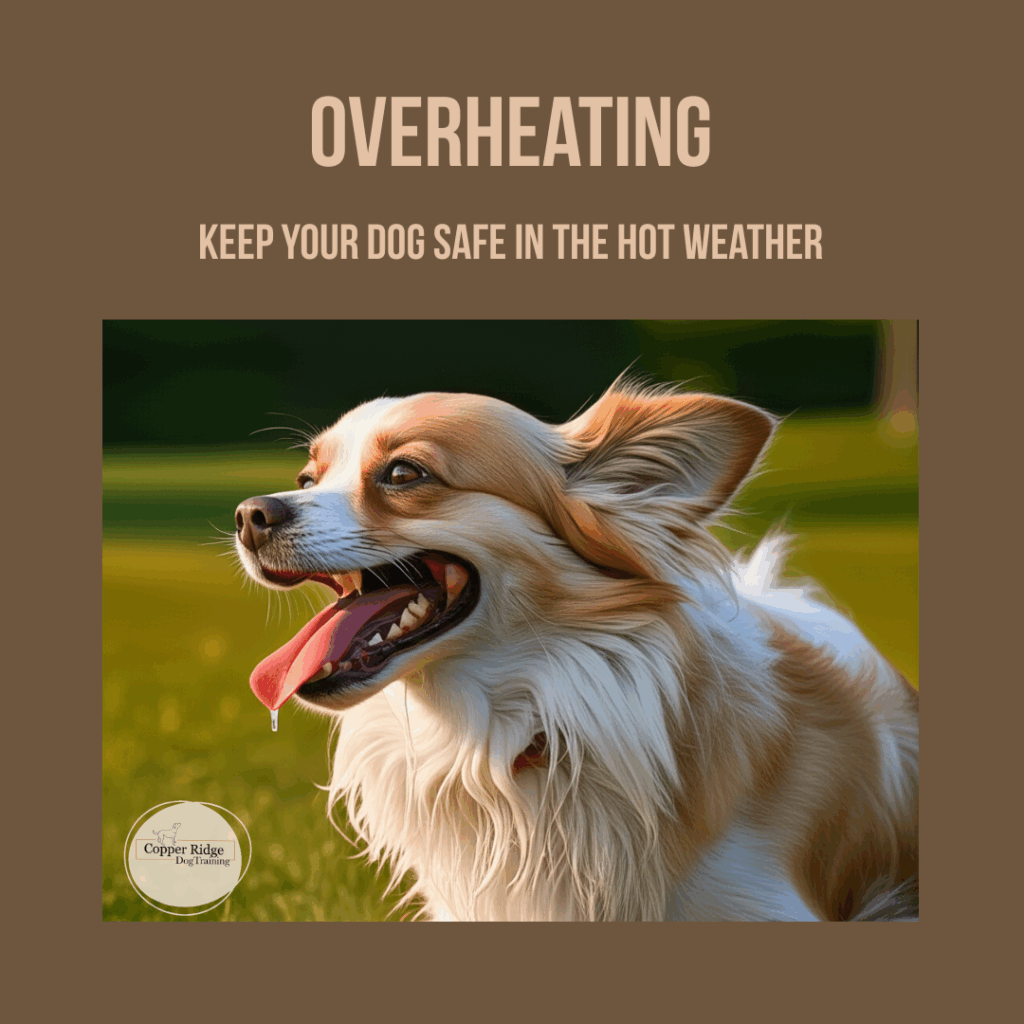
It’s important to keep an extra close eye on your dog for signs she may be overheating in the summer. There are very clear signs to look for that will tell you if she is becoming too warm. The easiest sign to see is excessive panting and saliva. Some other signs that may be a little less obvious are bright red or purple gums/membranes, glassy eyes, racing heart, and high body temperature. In severe cases your dog may also look like they are struggling for air or collapse unexpectedly.
Dogs with short or smooshed snouts, puppies, and elderly dogs are at an increased risk of overheating. If your dog has a double coat or darker fur, they may also be at an increased risk. It is important to pay extra close attention to these dogs in hot weather because they won’t be able to tolerate the heat as well as other dogs.
What to do if your dog is overheating
If you notice your dog is starting to overheat, get her out of the heat immediately. It is important that when your dog overheats that you don’t change her body temperature too quickly, this can be just as dangerous. You want to slowly help her lower her body temperature with cool washcloths and allow her to take small sips of cool water. It is important that the water and washcloths are not ice cold so that the body can cool down gradually. If you notice your dog is really struggling to cool off and in distress, seek veterinary help immediately. A dog that is too hot is at risk of serious health complications, so it’s important to get professional help quickly when it is needed.
Summer can be filled with fun adventures for your dog, but the hot weather imposes a new risk that isn’t present during the other seasons. Knowing what signs to look for, how to help your dog, and ways to prevent her from overheating will ensure that everyone stays cool and safe.